This year’s Labour Party Annual Conference was a decidedly less publicly acrimonious than has been the norm in recent years. After a hellishly challenging summer recess, Corbyn for the most part managed to avoid his party’s big set piece agenda setter being dominated by disputes over Brexit and anti-semitisim.
There was a clear sense amongst attendees that they have the momentum (sorry for the Dad joke) in terms of shaping the national debate about the economy, and while there clearly are still deep underlying tensions, this conference was an exercise in effective party management. Here are my thoughts on 6 key takeaways from this year’s party conference. Much of this is validation rather than new learning, but useful to highlight nonetheless.
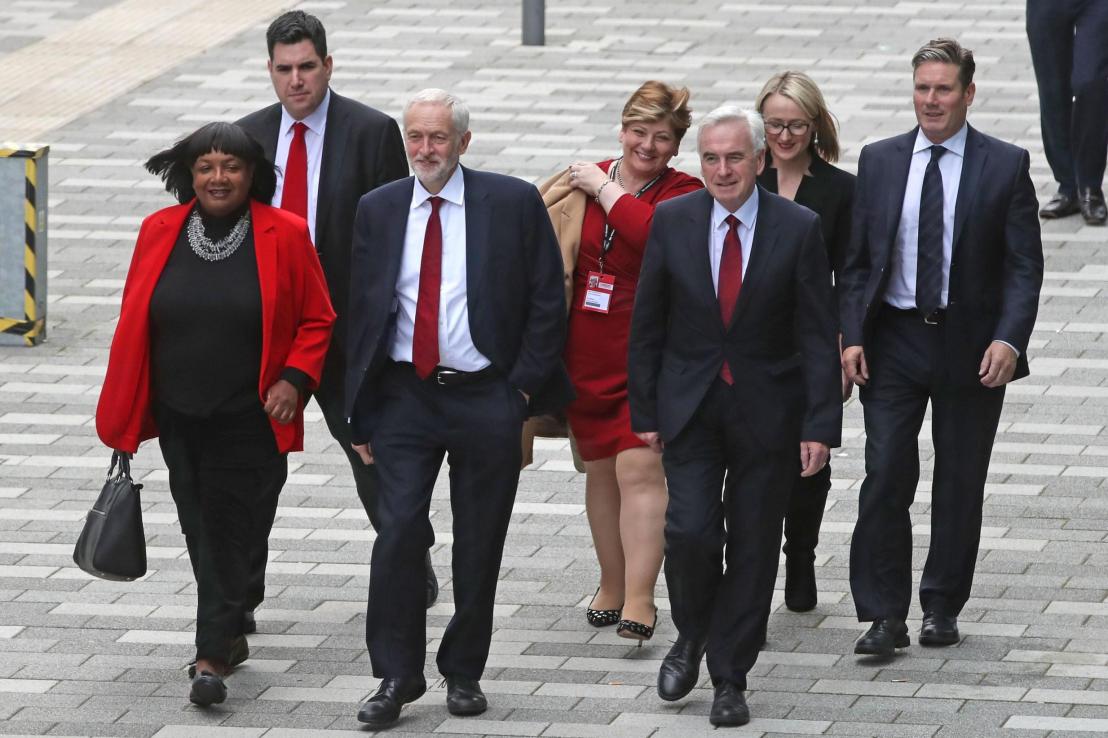
1. There is growing tension between the “movement” and the “machine” who both want control over the party’s long term future and make-up
In recent years the big battles had tended to be between centrists and Corbynites. The party’s centrists have now by and large been routed. Many of the members have left and the remaining MPs are for the most part licking their wounds and keeping their heads down. Some are even coming on board HMS Corbyn.
The drama at this year’s conference centred around the tussle between the affiliated trade unions who founded Labour and Momentum, the spin-out pressure group formed from Jeremy Corbyn’s leadership campaign that now wields huge influence around CLPs across the country.
A key policy that Momentum were pushing at this year’s party conference was mandatory re-selection for all Labour MPs. This would mean all sitting Labour MPs would have to face an open vote by local party members to be adopted as the party candidate for the next General Election.
In the end a watered down compromise was reached on the eve of conference with the party’s internal democracy review recommending steps that would make it less challenging for party members to initiate deselection procedures, but not require mandatory reselection. There were also measures passed which will give trade unions more influence in determining the selection of the next Labour Party Leader.
In the end Momentum’s leadership instructed its CLP delegates to vote for the compromise motion, but many defied them and according to The Guardian there were crises of “shame” in the conference hall.
This fight doesn’t feel over, and as the next General Election gets closer we can expect tensions to mount between the trade unions who want to preserve their power base, and those in Momentum who believe in ‘people-powered politics’ and see the union’s bloc vote influence as malign.
2. While Labour is deeply divided over Brexit, the intra-party tensions appear to be largely under control.
For months now political commentators have been speculating over the durability of Jeremy Corbyn’s fervent supporter coalition within the membership in light of the party’s acceptance of the inevitability of the UK leaving the EU.
Labour’s approach to Brexit policy could be depicted as two people walking across a high wire tight-rope while both carrying the same vase in high winds. Yet bizarrely, almost implausibly, it seems to be working.
One of the most frequently sported t-shirts at this year’s Labour conference was ‘Love Corbyn, Hate Brexit’, the latest wheeze of the Labour chapter of the People’s Vote campaign.
Without a doubt the vast majority of younger Jeremy Corbyn supporters within the membership are critical of Brexit and want to either avoid it altogether or leave on the softest terms possible – retaining freedom of movement and membership of the single market.
Corbyn and McDonell for their part are lifelong Eurosceptics who’ve made a decent stab at re-inventing themselves as advocates of a close, symbiotic relationship with the EU.
Corbyn and McDonnell’s strategy on Brexit centres on:
a) communicating to Labour leave voters in its heartlands that the party respects and is not trying to reverse the result
b) setting 6 tests that it knows will be impossible for the government to meet, so that it has political space to vote against any deal agreed by the Government with the EU27.
c) tacitly allowing Labour’s Shadow Foreign Secretarty, Emily Thornberry, and its Shadow Brexit Secretary, Keir Starmer, to issue strongly anti-Brexit signals of openness to single market membership and openness to the possibility of a second referendum.
I take with a pinch of salt reports of the Leader’s office being ‘deeply unhappy’ with Keir Starmer for adlibbing in his speech about Remain not being off the table as an option. If they really had a problem with Keir’s approach this far down the track, he wouldn’t be delivering a keynote on stage. They are deeply comfortable with the mixed messaging on Brexit.
d) Keeping its options totally open as to what its policy on relations with the EU will look like after we actually leave.
This is not to say Labour doesn’t have deep tensions over the issue of Europe that couldn’t yet erupt – it’s very possible it could even be the torch paper for a breakaway party, but right now it feels that for the most part Corbyn is keeping the troops in the membership on board if not entirely happy. The PLP is an entirely different kettle of fish on Brexit, but again it probably works to Corbyn’s advantage to have moderate Labour MPs making volubly pro-European noises.
3. They see themselves as a Government in waiting – seriously…
This isn’t really a newly learned lesson so much as a reaffirmation of the fact that Labour feels increasingly professionalised in the way its key frontbenchers are choosing to engage with the membership and the media.
There’s generally a much greater sense of message discipline and professionalism. They’re more on guard about the detail of policy plans they don’t want to emphasise, there’s more of an air of wariness about being depicted as being financially proliferate.
4. They want to appear radical but practical. They believe they can move the country to the left – but are picking their battles and are concentrating on industrial strategy in particular
It’s well known John McDonnell is the brainchild of the Corbyn revolution in the Labour Party. It’s also well known that he’s an out and out radical when it comes to the socialisation of the economy.
He’s dangerous for the Conservative Party because he is the kind of politician who was born to be on Sunday breakfast talk shows and the evening news. In these mediums he comes across as a reassuring, genial grandfatherly figure, who can take a volley in his stead and talk in value statements about the kind of economy and society Labour wants to build that seem to disarm the critiques of his interviewers.
What we saw at this conference is further evidence of their willingness to push the boat out in terms of populist policies for greater economic transformation. From a pledge to pump in public funding to create up to 400,000 new jobs in the renewable energy sector in the first term of a Labour Government, to plans to require larger companies to give shares to their employees, this is a party that wants to push the centre of gravity on economics yet further to the left.
McDonnell is emboldened to do so because of the unforced errors of Theresa May who, despite the departure of Nick Timothy, still seems bent on using rhetoric and promoting policies such as the energy price cap that don’t win us votes and only serve to legitimise the arguments of Corbyn and McDonnell that capitalism isn’t working and needs to be transformed by a more active state.
5. Emily Thornberry has serious ambitions to succeed Corbyn
One of the main talking points on the final day of Labour Conference was the impassioned speech given by Labour’s Shadow Foreign Secretary, Emily Thornberry, described as ‘barnstorming by The Daily Mirror. She departed from her departmental portfolio brief of foreign affairs to talk more broadly about the party’s future and in particular about the importance of rooting out anti-semitism within Labour, comparing left wing anti-semites to fascists.
This felt like a big pitch to get soft left and Labour moderates alike to see her as the natural successor to Corbyn. She’s grown hugely in confidence over the past couple of years and while she was once a regular source of ridicule within Westminster, she now enjoys increasing respect for her tenacity as a political operator and communicator. She’s certainly one to watch.
6. Labour’s NEC dropped its own plan for a second statutory Deputy Leader position – because Tom Watson backed it!
It’s no secret that Tom Watson is very much in the deep freeze with Jeremy Corbyn and the leadership office. His role in helping to force a second leadership contest in 2016, which Corbyn promptly blitzed home in, has not been forgotten or forgiven.
The party’s ruling National Executive Committee had voted in favour of a policy motion at its pre-conference meeting that was proposed by Wirral West CLP to create a second elected Deputy Leadership role that would automatically be filled by a woman. In classic Labour Party lore, there were no simultaneous plan to create a male-only Deputy Leader role, but that’s by the by.
The aim was to dilute Watson’s influence further and to potentially groom Corybn’s successor – with Rebecca Long-Bailey and Angela Rayner both seen as promising options in this respect by Corbyn and McDonnell.
But in pure The Thick of It satire, it appears that after Tom Watson himself came out to publicly endorse the proposal, the Labour leadership decided to pull the motion from the conference roster.
The lesson: In Labour’s mind a good idea isn’t a good idea if your opponents like it. It felt decidedly reminiscent of Brownite political logic.
 Daniel Cremin's Trove