Reform or die is a well known adage in politics. It captures the choice before the Conservative Party right now. Many seem content to muddle along with an attitude redolent of a cheesy 90s pop song at a Labour Students disco: “Things can only get better”.
Actually, they can get a lot worse, especially if we settle on a course of Mayism without May, and drift on without having the confidence to make an authentically centre-right case to the electorate about where we can go as a country. Responsible leadership isn’t simply about managing complexity and keeping the other side out – it’s about setting out a compelling direction of travel for the country and advancing it.
We need to listen to the ardent reformers – people like Liz Truss who recognise the hunger in the country for change and opportunity – not those content to “get through Brexit and then calm things down”.
The Conservative Party is in a deep rut right now – forget the deceptively reassuring polling of recent months. Those numbers strongly correlate to support for Brexit and dislike of Corbyn. Those variables play a significant role in explaining why we aren’t down at 26% in the polls.
The Conservative Party is not only increasingly forlorn, but dangerously disunited, with many of its most loyal erstwhile adherents looking on at its record askance – from Brexit to energy price caps, to banning anything that moves. Many in the membership are on their last nerve in terms of patience and goodwill. Large chunks of the existing and potential Conservative electorate are no doubt even more bemused, weary and out of sorts with us.
There’s plenty of blame to go around for this situation. The leadership of the party since that fateful summer in 2016 has been woeful, but so too has the wider architecture. Our associations appear to have lost their voice, the 1922 Committee executive is ineffectual, and CCHQ is in need of long-overdue renovation to put it mildly.
Nor can we solely blame the lack of a majority and the torturous process of delivering Brexit for our woes. Our Parliamentarians have also been far too accepting of a general listlessness and a litany of unforced errors.
When Mrs May went from a 20% lead in the polls to losing our majority, those of us in the party who had looked on askance at her direction of travel even before that General Election campaign, volubly called for her to go that summer.
We were told repeatedly to pipe down. That she was little more than a caretaker and that the party would take back control.There would be no more “Erdington Conservative” adventurism. I’m not a fan of that ethos at all, but at least Nick Timothy had a vision, however romantic it was, for what kind of country and party we should be.
Since 2017 we’ve had a confused dirge of domestic policies seeking to “steal Labour’s clothes” but actually serving to legitimize many of its arguments. Mrs May jumped the gun on post-18 reform, believing a “quick fix” with a Downing Street led review to slash fees could “win young people back”.
It’s now lost in the Whitehall long-grass. The Rubik’s Cube complexity of trying to reform university and broader post-18 skills funding to be both fair to students and properly resource their education, without adding to the deficit, has hit home. Whatever emerges will struggle to command a consensus in this fractured House. We’ve over-promised only to under-deliver.
Equally the Conservative Party has been forced to swallow an energy price cap which predictably led to what a Government spokesperson memorably stated was “the exact opposite of what we wanted to see happen”. While there is no doubt scope for radical market reform to benefit the consumer, this was a luddite policy that no serious Conservative should be backing.
Too many in the Cabinet have settled down to accept a pedestrian, grey political and economic strategy punctuated by moral earnestness about the need to police the vices of businesses and consumers. We seem to believe the way to demonstrate our commitment to “the greater good” is to actively seek out things to ban or lecture society about.
We don’t trust our citizens to be capable – we give free rein to Public Health England to regulate the calorie count in pizzas and campaign to ban McDonald’s from advertising before 9 PM. We are not the party of Harriet Harman, we’re the party of freedom and responsibility. What on earth has happened to our sense of purpose?
Let’s face it – we’ve become a party with a distinctly illiberal character in recent years, that puts too much faith in the wisdom of the “man in Whitehall” – or more aptly the “campaigner turned regulator in Public Health England”.
We’ve ceded a huge amount of political terrain to Labour to set the course of the next General Election as it is. We have swallowed whole chunks of Ed Miliband’s 2015 manifesto, with barely a whimper of protest from our own benches.
The Government has abandoned any pretence that it wants to challenge vested producer interests in the NHS, and the party has allowed the blob to once again regain control of the commanding heights of pre-19 education. The reforming zeal of the Gove era at DfE – when the Spectator and various think tanks held packed out conferences of education reformers and party activists to share ideas for a schools policy revolution – are long gone.
We have also bought into the idea that pandering to woke identity politics is a central feature of asserting the party’s ‘modern’ credentials. Now don’t get me wrong, I am a firm believer in the extension of opportunity and am not a critic of diversity.
But we’ve lost faith in the idea that voters value meritocracy and policies that genuinely foster aspiration and individual responsibility more than virtue signalling.
Most of the voters who could realistically vote Conservative in this country are not in fact raging “social liberals”. They’re social moderates – they are comfortable with tolerance and inclusivity. But they’re not “woke”, nor do they expect the Conservative Party to be. In fact many are likely as bamboozled as the party membership by the state’s rush to embrace the language and the policy agenda of woke identitarians, particularly in the sphere of criminal justice and freedom of expression.
The liberal Conservatives in the grassroots value individuality, treasure freedom, and believe we should be expanding opportunities but not engineering social outcomes. This vein of thinking can be found in Parliament, but one might say the authentic liberal Conservative cause has been “present but not involved” in terms of defining our party’s strategy since 2016.
Instead it’s the left of the party – the Wets – who buy into Mrs May’s “burning injustices” agenda and are fairly keen to extend the role of the state in people’s lives who’ve helped set the sail in recent years.
They’re of course not “socialists” or “social democrats”. But the “Greys” in government, as they’re increasingly called, like David Gauke, Greg Clark and Amber Rudd would not actually look that out of place in a Gordon Brown cabinet. There’s very little conservatism or economic liberalism playing out at the Ministry of Justice, BEIS or DWP.
In my view, we’ve no semblance of a long-term vision for what we stand for, what we want to conserve, and what we want to change to make the country better. People in Westminster are obsessed with histrionically debating the process by which we leave the EU and the “meaning” of the mandate given by Leave voters in 2016.
There’s been precious little real national level policy debate about the opportunities Brexit could present for de-centralisation of power, democratic renewal, regulatory innovation and new approaches to building productivity across the UK.
Where there is no vision, there can be no verve in politics. We have a cabinet predominantly filled with time-servers rather than transformers, with a few honourable exceptions.
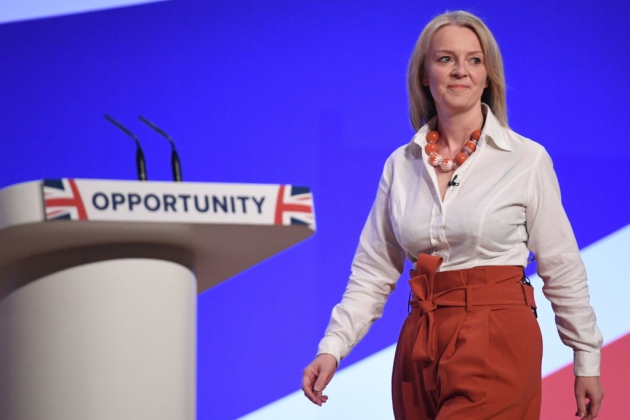
Liz Truss is a notable exception to this. She’s loving life at the Treasury making the case for a sleeker, smarter state and for a bold agenda for popular capitalism.
Rather than pouring doubt on the social utility of markets, she focuses on the need for intelligent regulation to improve competition.
She focuses on choice, voice and innovation in public services – and is one of the few politicians in Westminster to realise that voters want better public services not just politicians lauding levels of investment while wearing “I love the NHS” badges.
The key thing about Truss – her ethos or doctrine one might say – is her lazer beam focus, as she makes the case for free enterprise and a freer society, is her belief that this country’s best days can lie ahead. That our future can be better than our past.
Too many in senior positions in our frontbench currently suffer from a paucity of imagination and aspiration in this regard. They are quiet life technocrats who want to take the path of least resistance more often than not. The country is crying out for change – more of the same is a recipe for managed decline.
Just as Mrs Thatcher broke a stultified, corporatist consensus in the 1970s, so too do we need a “Truss doctrine” mindset today to take hold across our party. We need to engage with greater gusto and skill in a battle of ideas, and we need to be comfortable to be outspoken as we do.
We’ve barely taken the field in that battle of ideas for the past 3 years, while Labour, for better or worse, have put forward a bold vision for what the country’s future can be, and how we are the party to deliver it.
This is not code for make Liz Truss the Leader of the Conservative Party. I think she’s incredibly talented but personally feel her talents would in the immediate term be ideally suited to the role of Chancellor or leading a beefed up Enterprise, Productivity and International Trade Ministry. We need a genuine economic liberal with some vision at the helm. Longer term, who knows? We should never put a cap on talent and aspiration.
We cannot hope to win a majority by running the next General Election as a “project fear” to lock Corbyn out of Number 10. It simply won’t be enough.
We need a “project freer” – an agenda to give people more control over their lives, more choice as a consumer, and to give them more power and influence to shape the communities around them.
If the centre-right can re-discover its clarity of purpose, its self belief and its openness to new ideas and calculated risk, the Conservative Party can not only survive, but it can go on to thrive.
More importantly it can build an agenda for a more empowered, prosperous and opportunity rich society that is globally engaged but also robustly prepared to weather the headwinds of globalisation.
I started with a well worn political adage, so I thought I’d finish with one as well that Liz Truss in particular is associated with: Decline is not inevitable.
If we put our faith in authentic and optimistic centre-right and conservative ideals and ideas, this country’s future can be very bright.
 Daniel Cremin's Trove